
Find the Louisa Property Owner
Answering who owns a Louisa County property means tracing the parcel from the assessment system into the land records. The assessment owner field supplies a starting name for tax administration. A recorded deed shows who took title. GIS keeps both documents tied to the same ground. Keep those functions distinct when you weigh a recent sale, an estate transfer, or a parcel split. Each record answers a different question.
- Search Louisa Assessments with one address or one owner-name detail.
- Copy the displayed map and parcel number, situs and mailing address.
- Search the Circuit Court clerk index for the newest deed tied to the parcel or party.
- Compare the legal description and prior-instrument references before treating the name as confirmed.
A personal name does not always work. Try the address, or the exact LLC, trust, or estate name shown in the record. Louisa Assessments is the county's owner and address search entry point.
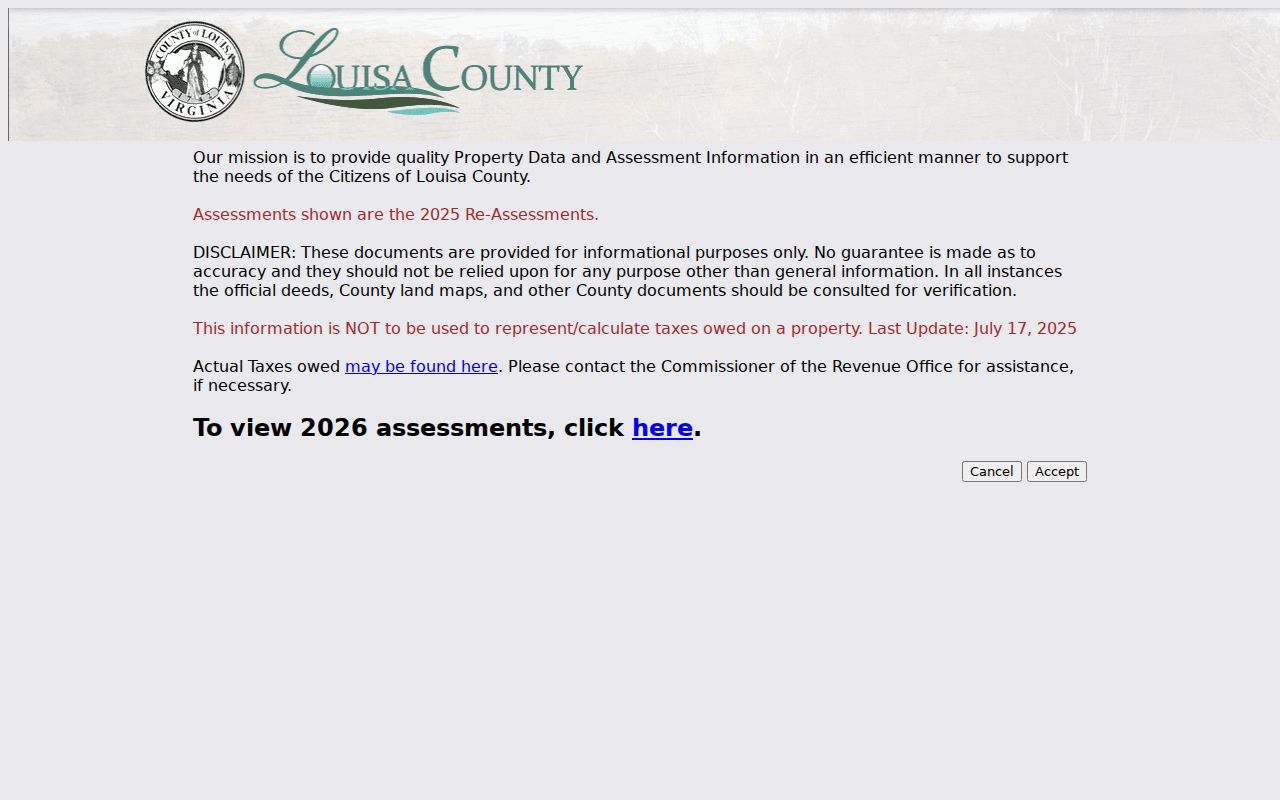
The portal opens an assessment lookup; exact result labels require a live parcel search.
Where Louisa Names an Owner
The Commissioner of the Revenue's assessment roll offers the easiest public starting name for a parcel. It is an administrative label, though. When the question is who received an interest and when it was recorded, inspect the recorded deed in the Circuit Court Clerk's office. The Treasurer's bill names the account that pays. Its mailing name may differ from the deed party responsible. Keep the sources separate. Always record the parcel number so that similarly named people or companies are not confused.
Each record serves a different purpose and refreshes on its own cycle. The assessor maintains the roll for tax administration. The clerk's deed index points to recorded instruments. GIS repeats parcel context and often shows the current assessment owner label. None of these summaries replaces the source document itself.
| Source | What it contributes | How to confirm |
|---|---|---|
| Louisa assessment roll | Owner name, situs, mailing and parcel key | Match map number and contact assessment staff |
| Circuit Court deed index | Recorded grantor, grantee and instrument reference | Review the deed image or clerk copy |
| County GIS | Parcel shape and map context | Compare parcel ID with the assessment and deed |
| Virginia SCC CIS | Entity name and business filings | Match exact legal name to the deed party |
An assessment result can show the owner name, mailing and situs addresses, map number, assessed value, and property characteristics. Field labels vary. Treat the name as an owner-of-record lead, not a title conclusion.
Use One Louisa Owner Detail
Louisa County asks for a single search detail in the assessment portal, such as a name or an address. Don't combine them. The portal may reject a stacked query. The GIS viewer separately confirms address, owner, and parcel-ID searches. Spell initials, company suffixes, and punctuation exactly as the deed or assessment record shows them.
A parcel number guards against same-name mix-ups. Cross-check it with the situs address and the deed description, above all when one person or entity holds several parcels. Search an LLC or trust under its indexed name. Don't assume the filing reveals private members or beneficiaries.
The Virginia SCC Clerk's Information System can confirm an entity name and its public filing history when a Louisa deed names a company. That check comes last.
Match the company name from the state filing to the exact deed party. An agent record alone is not proof of land ownership.
Confirm the Louisa County Deed
After any sale or transfer, check the most recent recorded deed. Cott eSearch links indexed land records with PropertyCheck. Virginia Secure Remote Access offers another route. Local clerks decide whether free index-only access exists and whether images can be viewed remotely. Subscriber images require clerk authorization plus a signed agreement.
Search the exact party name, note the instrument reference, and compare the legal description. The public Cott landing page does not state the online start year. Don't assume an older deed is missing. Use Certified Dates or call the Louisa clerk at 540-967-5312 first. Courthouse terminals and direct copy requests remain fallbacks.
A deed can record before the assessment card shows the new owner. The county publishes no standard update lag. Compare dates yourself. Match the recording date against the assessment date rather than trusting a fixed number of days. The Louisa County current owner page handles the present owner-of-record workflow separately.
Louisa Situs and Mailing Names
A situs address tells where the parcel sits, and a mailing address tells where the bill goes. That can be another town or state. Louisa County roads carry route and highway labels. A town mailing city or a lake-area name can cover land outside incorporated limits.
Don't reject a deed match over a street-label difference. The label may have changed. Compare the parcel ID, acreage, legal description, lot number, plat, and adjoining owners. If an address search fails, try the owner name, the parcel number, or alternate road wording. The county coordinates address corrections with E911, yet the deed description remains the link to older land records.
Near Louisa or Mineral, check the GIS municipal boundary and the town zoning map in addition to the county assessment record. A mailing city alone settles nothing.
Estates, Trusts and LLC Owners
Owners come in many forms. A deed in Louisa County can name an individual, an LLC, a trust, an estate, or a fiduciary signing for someone else. Copy the party name exactly as indexed. Then follow the instrument reference. A trustee or personal representative may sign without being the beneficial owner, so the indexed name is not always the whole story. The county assessment name helps you find the account, though it is not a roster of heirs, beneficiaries, or company members.
Names differ across the assessment, tax bill, and deed. Keep the instrument number and ask the clerk which recorded document explains the change. Probate orders, deeds of distribution, and survivorship filings often clarify why an owner of record changed. A will alone proves nothing about real estate. Only a recorded deed completes the transfer.
Entities take a little more digging. When the assessment shows an estate, trustee, or company, search the deed party exactly as recorded and note whether the instrument describes an individual, fiduciary, or entity capacity. Virginia's SCC business search confirms that a company filing exists. It shows public filing history, too. It cannot prove the company owns a particular Louisa County parcel or reveal every private member or beneficiary. Members stay private. For an estate, a probate filing may explain who has authority to convey. Match the later deed to the land description before treating that filing as a title transfer.
Louisa Assessment staff offer one clear rule. Removing a survivorship name takes the deed and a death certificate. Other name changes require a filing with the Circuit Court clerk. Vital records carry their own privacy and eligibility limits. Older public records and estate instruments follow separate rules. Ask the right custodian first.
Companies deserve one more check. SCC CIS confirms the exact public entity name and filing status. That can help match a deed party, but a registered-agent address is not proof that the agent owns the land.
PropertyCheck for Louisa Owners
Louisa's Circuit Clerk announced PropertyCheck on September 17, 2024, and the service is free. Alerts cover property and mortgage filings. They start once a subscriber enters the owner name exactly as shown in the official record. That quirk matters. Preserve the spelling from the assessment roll or deed when setting up a notification.
An alert flags a new filing. It is not title insurance. No alert service catches every misindexed record. If something looks wrong, open the instrument in the official index or contact the clerk.
The official entry point is the Louisa PropertyCheck page.
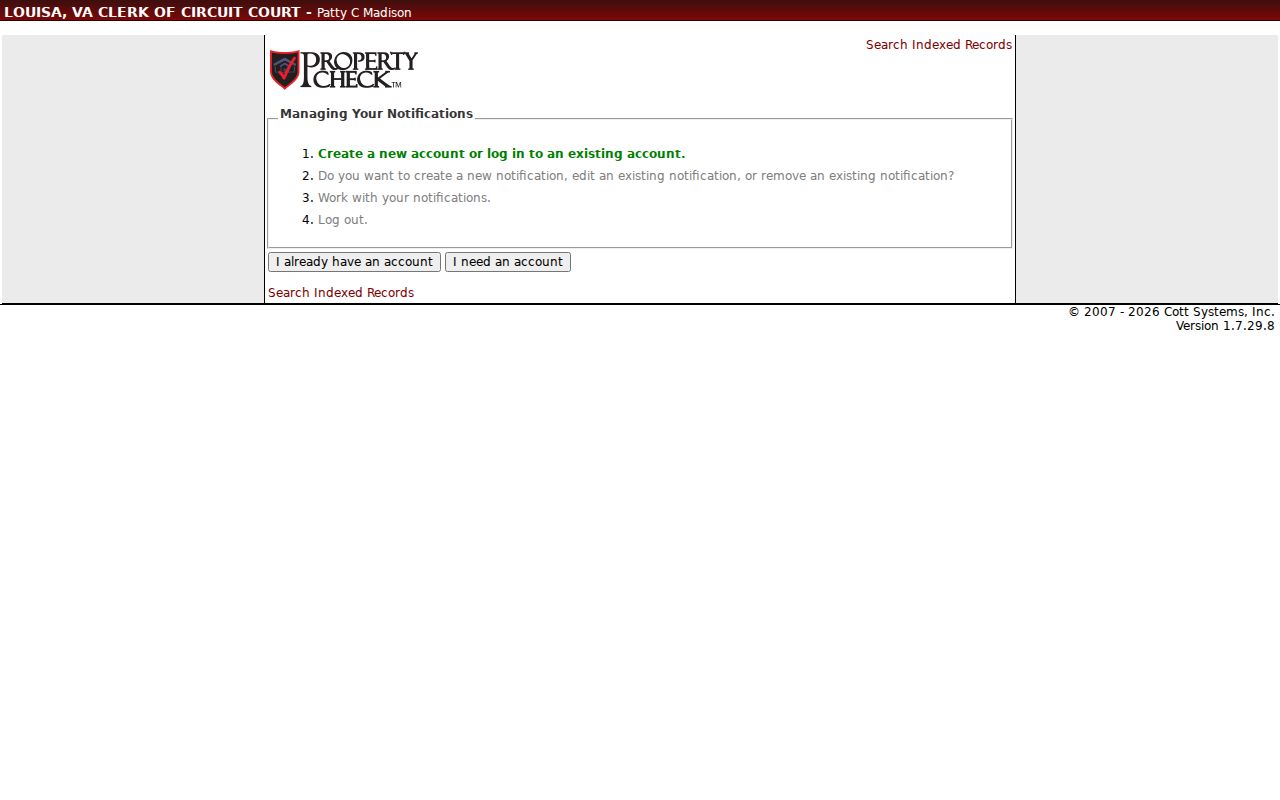
Set the alert, then verify each match against the record itself through the clerk-linked notice path.
What an Owner Lookup Cannot Prove
An owner lookup tells you one thing. It names the person or entity carried in a public record. It does not prove occupancy. It will not disclose protected information or settle a boundary. Virginia's Address Confidentiality Program lets some participants use substitute addresses. Statutory exemptions restrict other records. Never try to identify or expose a protected person through related files.
Deeds leave gaps. A single deed can omit an older interest or a later release. A survey and title review may still be needed for a transaction. GIS helps you pick the parcel. Use the record for lawful property due diligence, house history, or civic review.
Use owner information lawfully. A Louisa County owner name is not an invitation to contact, monitor or target a person. Do not use public records to stalk, threaten or harass anyone.