
Louisa County Deeds by Instrument Type
Different instruments record different rights in Louisa County land records. A deed transfers an interest. A deed of trust secures a debt, while a satisfaction releases it, and the Circuit Court clerk keeps the index and recorded instrument images for Louisa County property.
| Instrument | What it records | Common research use |
|---|---|---|
| Warranty or bargain-and-sale deed | Conveyance of a described interest | Find a grantee and source instrument |
| Deed of trust or mortgage | Security interest in real estate | Check a recorded loan document |
| Certificate of satisfaction or release | Discharge or release of a recorded claim | See whether an indexed encumbrance has a release |
| Easement or right-of-way | Use rights across or alongside land | Trace access, utility or road rights |
| Plat | Surveyed or platted lot layout | Compare lots, roads, easements and parent land |
| Judgment, lien or lis pendens | Claim or pending action tied to property | Locate the filing and its recorded status |
Read the whole instrument, not just its label. The full deed shows the parties, recording date, legal description, signatures, prior-instrument reference and any map or plat citation a title chain may need. The grantor conveys; the grantee receives.
Search the Louisa Grantor-Grantee Index
Louisa’s online land-record entry point is Cott Hosting eSearch. Its landing page links indexed-record search and PropertyCheck. The account area shows guest sign-in, a user ID and password route, account creation and Certified Dates. Exact field labels and document-type options appear only inside the guest or account flow. The oldest Louisa year goes unstated.
For a chain, search a known grantee first. That deed’s grantor becomes the next name to follow backward. Direction can blur. Search the party in both roles, and match the book and page, date, legal description and parcel references before tying an instrument to the subject land.
- Open the indexed-record link or sign in as a guest.
- Search a party name and choose a document category if the live form offers it.
- Record the index result, date and book/page or instrument identifier.
- Open the image when authorized, or ask the clerk for the source copy.
- Grantor
- The party conveying an interest.
- Grantee
- The party receiving the interest.
- Book and page
- A volume location used in older indexing.
- Instrument number
- A unique recording reference when the system uses one.
The Cott account and guest page shows Certified Dates and sign-in choices.
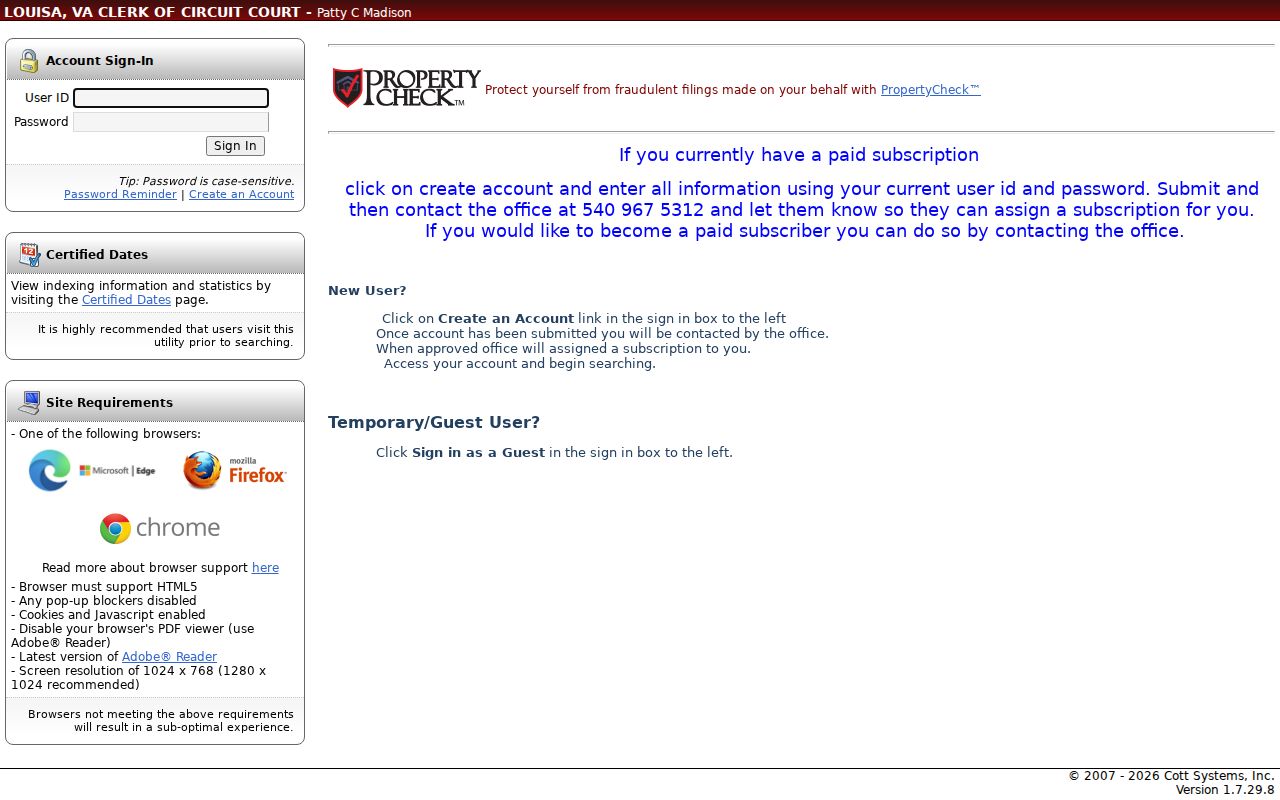
Certified Dates verify the actual online index range, not an assumed countywide cutoff.
Louisa Cott Images and Virginia SRA
Cott offers both a guest search and an account path. The local clerk, though, controls image access and subscription terms. Paid subscribers ask the clerk to assign their subscription. New applicants wait on review by the office. A supported browser is required, with JavaScript, cookies, pop-ups and PDF viewing all enabled.
Virginia Secure Remote Access, known as SRA or COVERS, gives another route to circuit-court land records. The state offers free index-only access where the local clerk turns it on. Images take more: clerk authorization, a signed agreement, and any applicable fee. An index hit is not the same as an obtained image.
If remote access will not return an image, try the courthouse terminal. You can also call the Circuit Court clerk at 540-967-5312 or send a focused request by phone or mail. Ask whether a plain copy, a certified copy, or an inspection is available, and what the current charge runs.
Virginia SRA land-record access terms lay out the difference between index viewing and subscription images. For Louisa access, the county clerk remains the final authority.
Recording Fees for Louisa Instruments
Virginia Code section 17.1-275 sets statewide recording fees. The fees scale with document length. The same statute lists services beyond basic recording, so confirm the current schedule with the Louisa clerk before filing or ordering a certified instrument.
| Document length | Recording fee | Note |
|---|---|---|
| 10 pages or fewer | 18 dollars | Instrument or document |
| 11 to 30 pages | 32 dollars | Instrument or document |
| 31 pages or more | 52 dollars | Instrument or document |
| Oversized plat or map | 17 dollars per page | Applies above 8.5 by 14 inches |
The statewide schedule allows some paper land-record electronic-filing and digital-certification charges up to five dollars each. Louisa publishes no local copy-fee sheet. Confirm image or certified-copy costs with staff, since recording a new document differs from requesting an existing copy. The fee source is the statute. Virginia Code section 17.1-275 holds the recording fee schedule.
Deeds of Trust, Releases and Easements
Louisa clerk indexes cover deeds of trust, mortgages, assignments, certificates of satisfaction, releases, easements, rights-of-way, mechanics’ liens, tax liens, financing statements and judgments. A filing’s name says nothing about its status. An assignment can identify a later holder. A satisfaction or release shows that a recorded security interest was discharged.
A lis pendens signals litigation affecting land. It decides nothing about ownership. Judgments, liens and foreclosure filings each carry their own procedural context. Note the court, parties, filing date, property reference and final disposition, then check the land record for a recorded order or deed.
Search the party name exactly as written. An LLC, trust or estate can appear as a party, and spellings or punctuation shift across years. Names alone can mislead. Compare the legal description and adjoining owner references before linking any deed to your parcel.
Louisa PropertyCheck Filing Alerts
Louisa County owners gained a new safeguard in 2024. On September 17, the Circuit Clerk announced free PropertyCheck alerts for property and mortgage filings. An owner signs up with their name spelled exactly as it appears in the official record. They pick a notification method and create an account. New indexed filings under that spelling then trigger a notice. Louisa deed records stay the ultimate proof either way.
Treat any alert as a monitoring aid rather than title insurance. It can miss a misindexed or suspicious instrument. When a notice arrives, verify the deed through Cott or call the clerk. The county land-use database also warns that spam messages may demand fees or personal details. Confirm payment requests directly with Planning and Zoning before paying anything.
The clerk-linked PropertyCheck page is the official notification source.
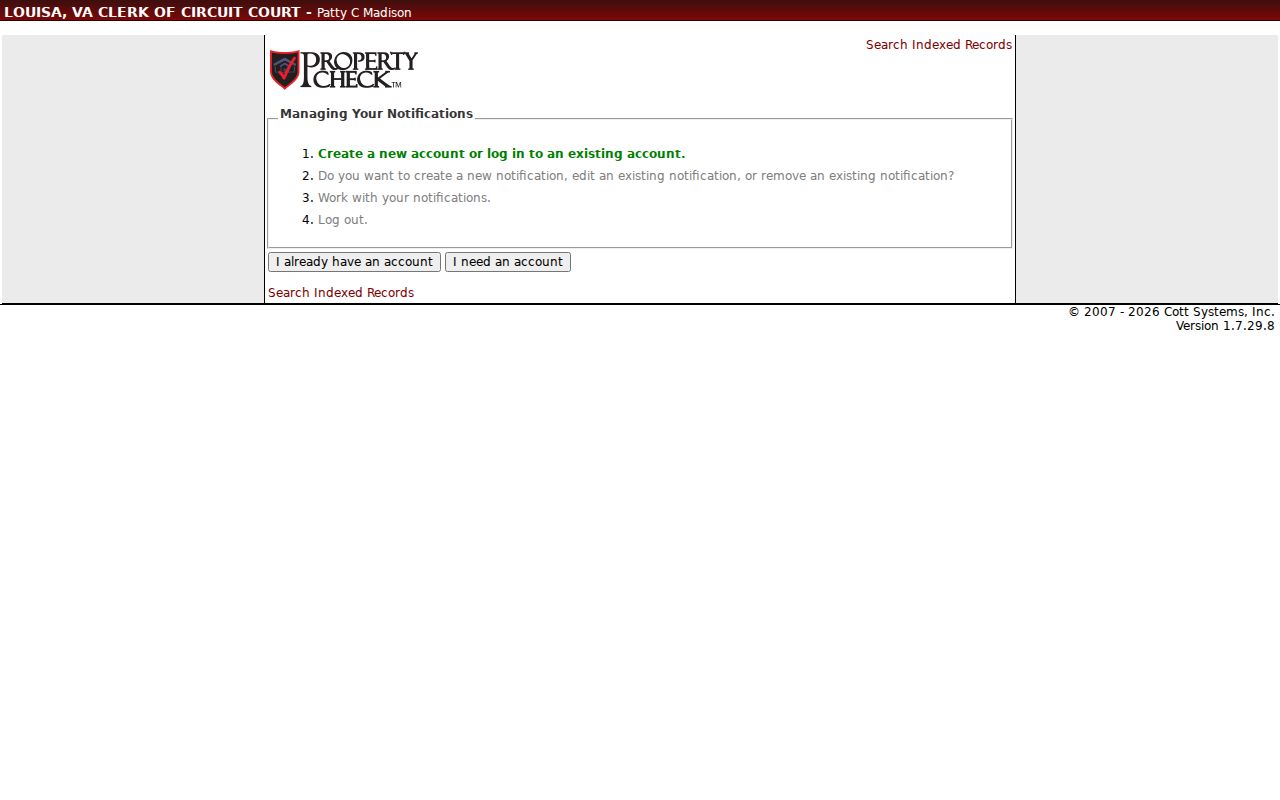
The capture shows the local alert entry point beside the indexed-record search path.
Older Louisa Deeds at the Library
The online start year needs confirmation in Cott Certified Dates or with the clerk. For deeper deed research, the Library of Virginia catalog lists Louisa deed book 34 from 1791 through 1800. It also lists deed volume 38 covering 1825 to 1831, deeds from 1854 and 1855, and combined deed, will, and order books. The list is not exhaustive. County history material reports the deed books and first minute books were restored. Verify which volumes survive before any visit.
The Library of Virginia Chancery Records Index covers Louisa with indexed information and originals available through 1927. Most entries fall between 1800 and 1875. A chancery file can explain a partition, an estate, or a title dispute. It can also explain a boundary claim. It never replaces the recorded deed that controls the conveyance today. The Chancery Records Index availability list identifies Louisa among the counties.
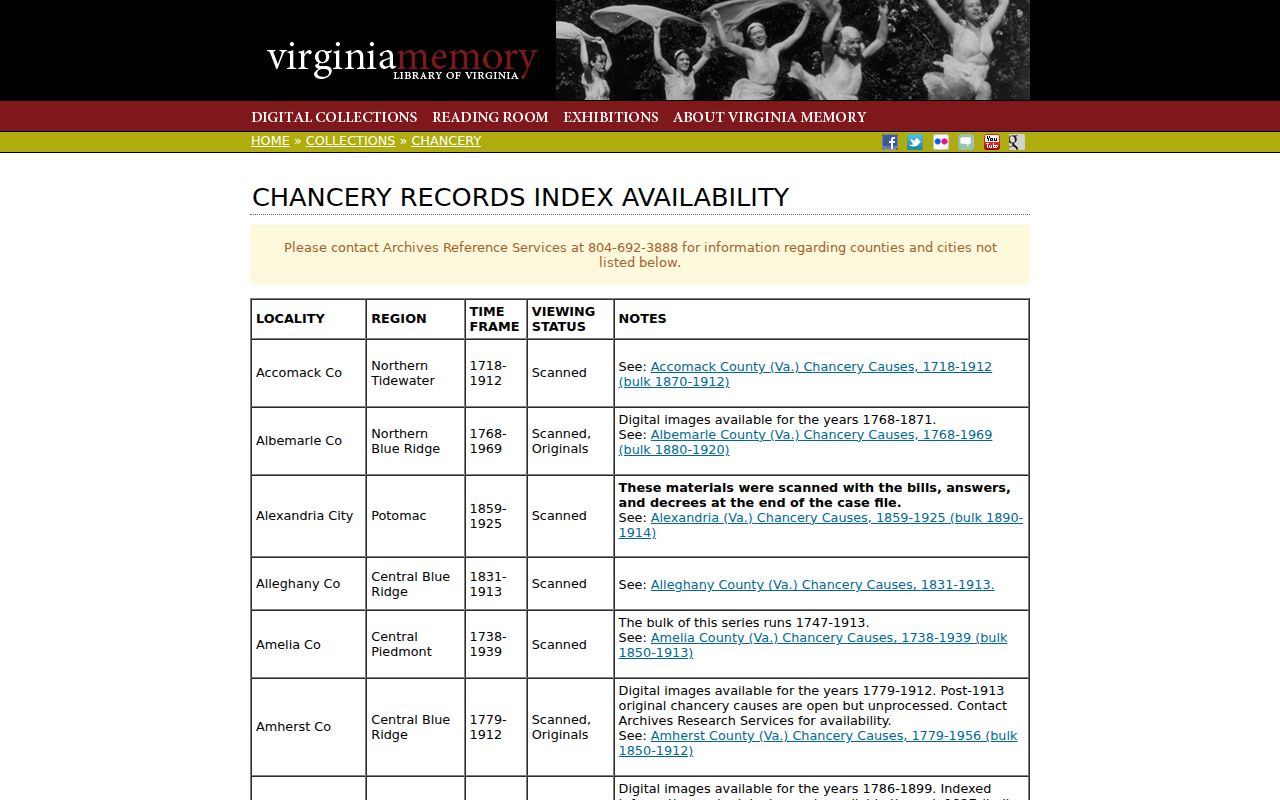
Find a case reference in the index first, then pull the file and compare its land description against the deed records.
Read a Louisa Deed with Care
A deed entry is only a pointer. It is not the full chain. Compare the recording date, grantor, and grantee. Check the consideration language where present. Note the book and page or instrument number and the legal description. Older descriptions lean on metes and bounds and acreage. They may cite a named road or an earlier deed. Newer plats may name a lot and subdivision instead. Read the exceptions, reservations, and easements in the text. A separate deed of trust can create a lien. A recorded release clears it. Neither one substitutes for the conveyance into the current owner of record.
Other details matter too. Check tax stamps, signatures, acknowledgment, and any prior instrument cited. Descriptions may use bearings, distances, adjoining owners, or lot and block. Old Louisa books mix deeds with wills, orders, and minutes. A catalog title may not tell the whole story of what a volume holds.
Louisa subdivision procedures require a final plat. The plat must identify the source of title and the last instrument in the chain. That plat can connect a modern lot back to its parent land. Parcel splits, however, may change lot labels and tax map numbers. Compare both the planning file and the recorded plat before drawing conclusions.
A scanned image or index entry can be incomplete. A claim may affect a sale or estate. A title professional should review the chain rather than relying on one deed as a complete search. The Louisa Circuit Court clerk contact page lists office details for copy and record questions.
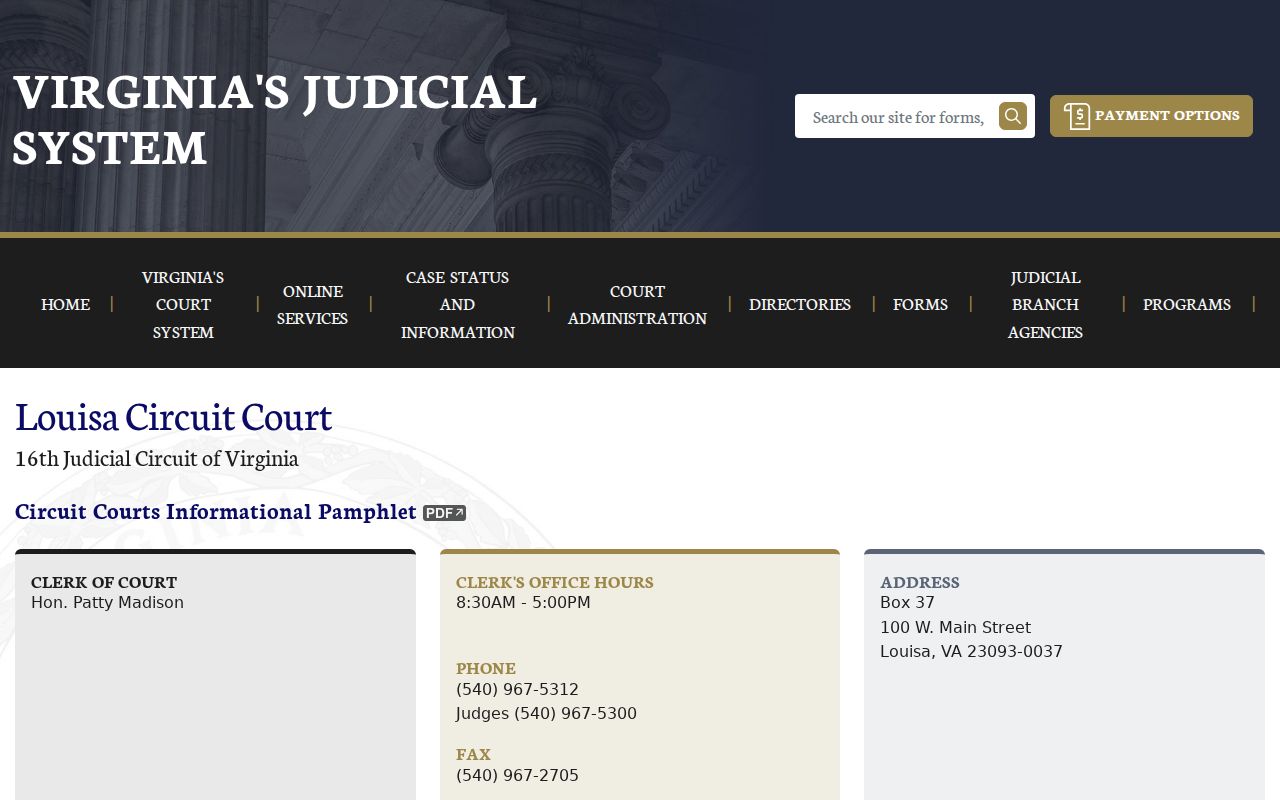
Confirm hours and current copy procedures with the clerk before traveling to the courthouse. The backward chain of prior owners has its own method on the Louisa County former owners page.
Louisa County Deed Record Limits
The clerk's index is a finding tool, nothing more. A recorded document can be misindexed, later corrected, or tied to only part of a larger tract. A GIS parcel outline can shift after a division. An assessment label can lag a recent transfer. Verify the recorded document with the clerk, and compare the legal description, source instrument, plats, and releases that affect the property.
Not a title opinion. An index hit does not establish clear title or remove every lien. Use the official instrument and qualified title review for a purchase, estate transfer or legal dispute.