
Trace Former Louisa Property Owners
Start with the newest deed for the parcel. Its grantee becomes the next grantor to trace. The legal description keeps each step tied to the same tract. The table below is a worksheet for verified instruments, not a sample Louisa transaction. Fill it in from each index hit.
| Transfer date | Grantor to grantee | Deed type | Book and page |
|---|---|---|---|
| Most recent recorded deed | Copy named parties | Copy indexed type | Copy clerk reference |
| Prior acquisition deed | Search prior owner as grantee | Copy indexed type | Follow source reference |
| Earlier transfer | Continue with the next grantor | Check the image | Record the volume location |
Match acreage, lot or plat, adjoining owners, source instrument, and legal description at every step. A name alone can point to a different parcel.
Walk the Louisa Deed Chain Backward
Begin with a deed into the present owner. Take the grantor named there back to the prior conveyance. Search both roles when direction is unclear. Log every book and page or instrument number before moving on. Add the recording date, parcel reference, and legal description. If acreage or boundaries shift, stop and locate the parent tract or recorded plat rather than forcing similar names into one chain. The clerk's land index supports grantor-grantee searching. Its public page does not show the live field names or the earliest year covered. So begin with the latest deed and repeat the search using the grantor from each preceding transfer. Search names exactly as indexed. That includes surnames, initials, estates, and company names.
- Find the latest deed for the current parcel and note its grantee, grantor, date and reference.
- Search the prior grantor as grantee to locate the deed by which that party acquired the land.
- Compare the legal description, acreage, adjoining owners and plat references.
- Repeat the process until the online index limit, then continue in older books or microfilm.
- Chain of title
- The sequence of recorded transfers for a parcel.
- Grantor
- The party conveying an interest in an instrument.
- Grantee
- The party receiving that interest.
- Source of title
- The prior instrument cited by a deed or plat.
The Louisa County deed records page covers instrument types, image access, and copy steps. Former-owner research depends on it.
Verify Louisa Online Coverage Dates
Cott Hosting’s public Louisa page provides an indexed-record search link and a Certified Dates utility. The earliest year was not displayed on the public landing page. Use that utility or call the Circuit Court clerk at 540-967-5312 before treating a missing online result as proof that no deed was recorded.
Virginia SRA is another remote path. Free index-only access depends on whether the local clerk enables it. Images require approval from that clerk, a signed agreement and applicable charges. If neither site supplies the needed document, ask for a courthouse terminal search or a focused copy request.
The Cott account page shows the Certified Dates and guest sign-in controls.
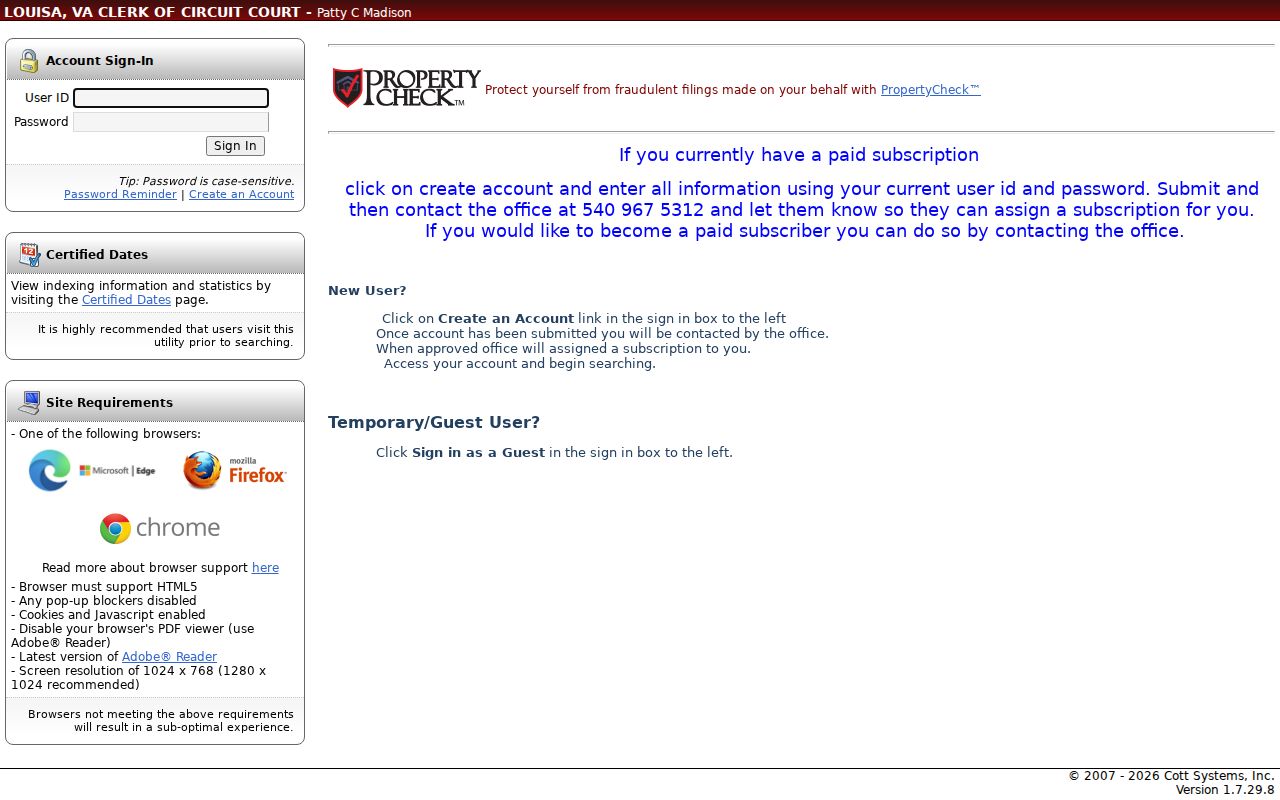
Check the actual date range first. That stops a modern index limit from masquerading as a gap in the chain.
Louisa Deed Books at the Library
The Library of Virginia catalog lists several Louisa volumes worth knowing. Deed book 34 covers 1791–1800. Deed volume 38 covers 1825–1831. Separate deeds appear for 1854–1855. Combined deed, will, and order volumes can place land transfers beside estate or court actions. This helps when a chain runs through an inheritance. These are catalog samples, not a full inventory. County history material reports the restoration of deed books and first minute books. Confirm which volumes were restored before arranging a visit. The Library of Virginia also holds county land records, wills, and orders. It keeps maps, manuscript plats, and microfilm as well. When the modern index stops, search the catalog by county and party name. Add record type and date to narrow the results. Older deeds rarely carry a modern address. Expect a road, stream, neighbor, or acreage description instead of a parcel ID. Note the volume title, date span, and catalog identifier when requesting material. Then compare the archive entry against the recorded clerk reference. If a volume is unavailable, ask about catalog and reproduction options. The same goes when a name is indexed differently. LVA digital collections include local records and maps.
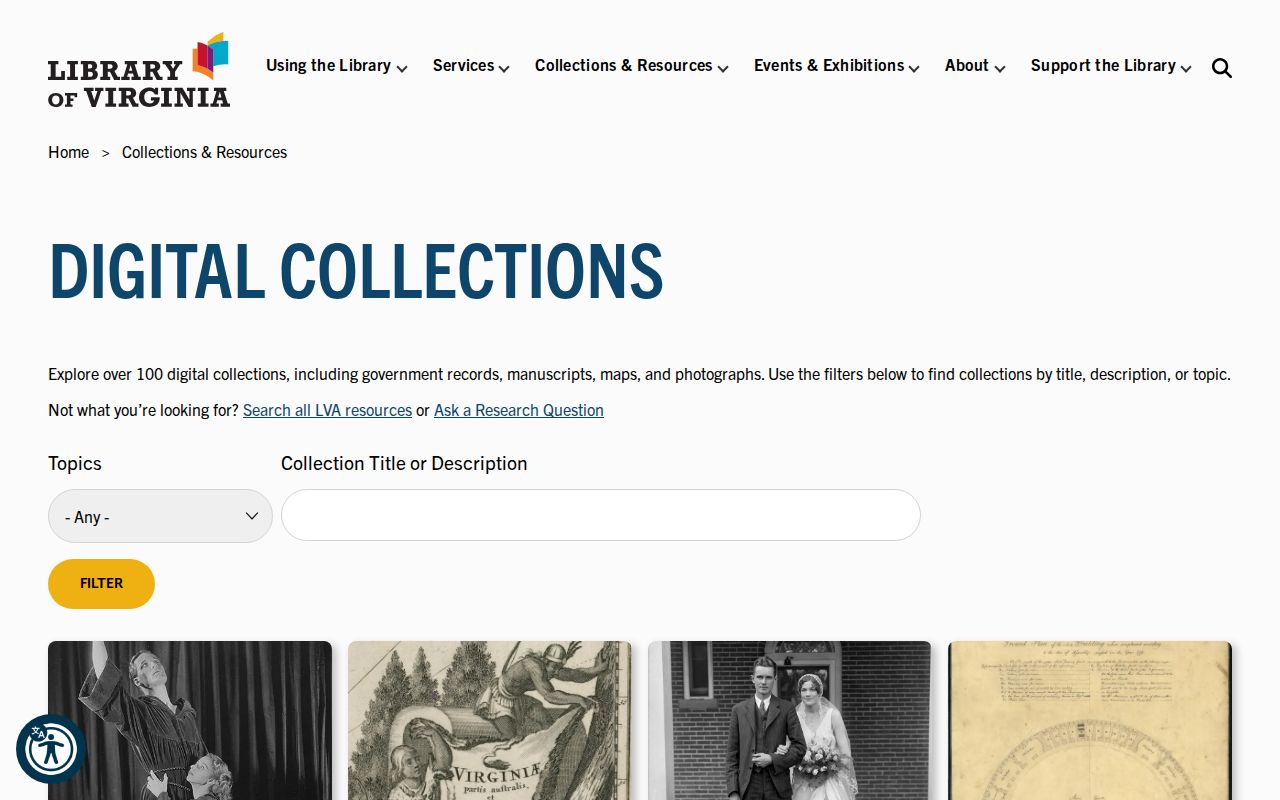
Locate the original volume with catalog references first. Then compare the instrument against later deeds.
Chancery and Louisa Estate Gaps
Louisa County chancery causes can unlock an owner chain that deeds alone leave dark. The Library of Virginia's Chancery Records Index covers Louisa. It offers indexed entries, with originals available through 1927. The heaviest coverage runs from 1800 to 1875. Pull the party and county entry first. Jot down the case reference, then chase the underlying file or final order. A partition, estate fight, or boundary dispute may cite an earlier deed. It may also describe the land in detail. Treat the case file as supporting evidence, though. It never replaces the conveyance actually recorded in the Louisa County land books. Any final order plus recorded deed must be checked before you draw a title conclusion.
Probate material sits with the Circuit Court clerk. Wills, fiduciary appointments, and deeds of distribution all pass through that office. A will alone does not transfer title. Record the decedent and the fiduciary. Note the probate date, the case number, the heirs, and any land description or instrument reference. Death certificates follow separate VDH access rules, so keep them out of the deed chain. The LVA Chancery availability list confirms Louisa as an indexed county.
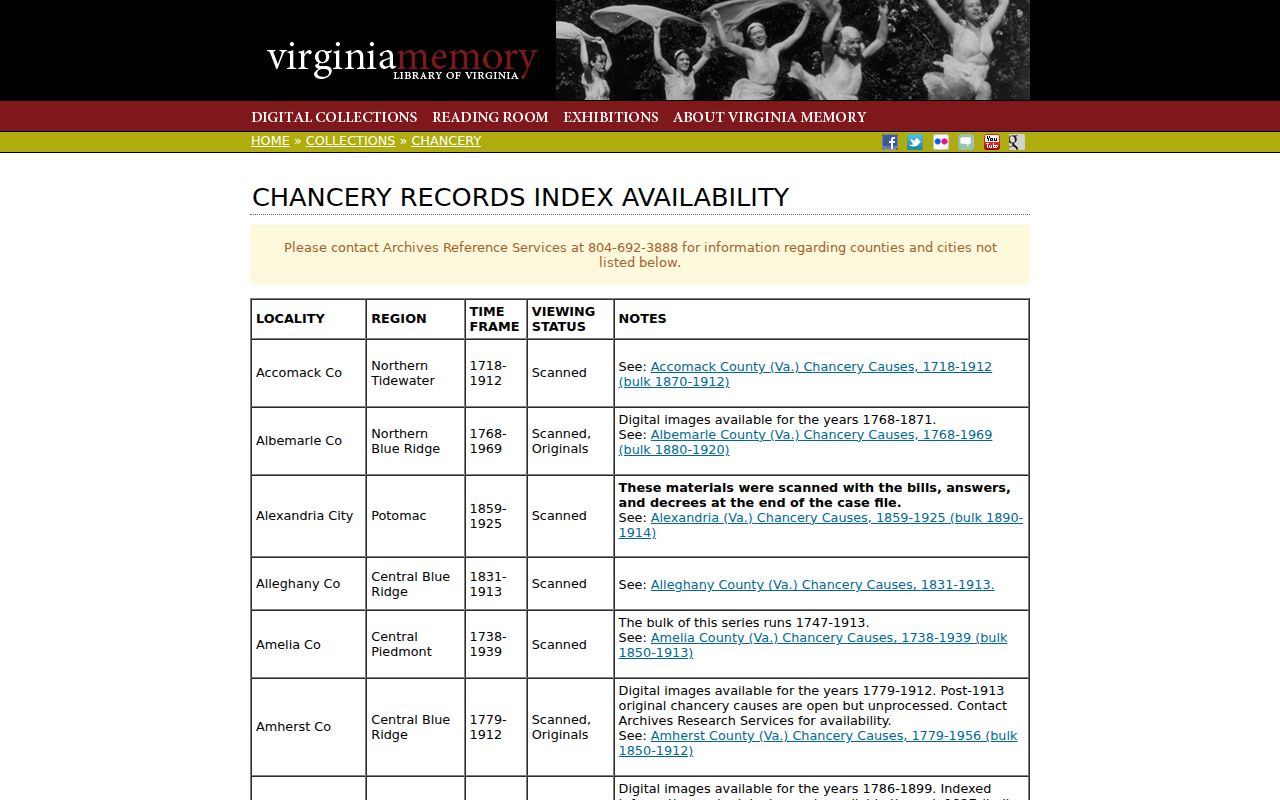
Use a chancery result as a lead, not a substitute for the recorded deed itself. Virginia Vital Records explains public release periods and current certificate access for birth, death, marriage and divorce records.
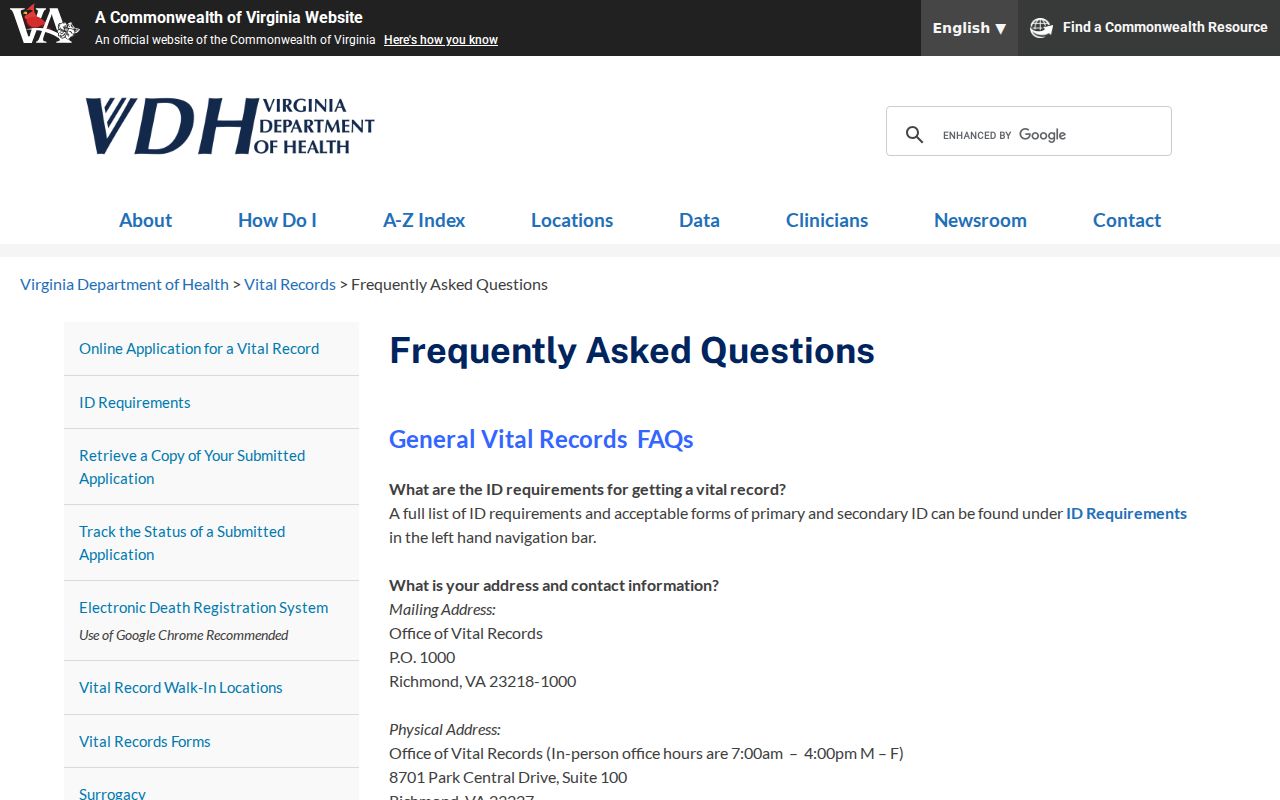
Virginia law sets clear waiting periods. Birth records open to the public after 100 years. Death, marriage and divorce records open after 25 years. Certified copies of current records carry their own eligibility and identification rules. The Central Virginia health district vital-records page provides a local request route.
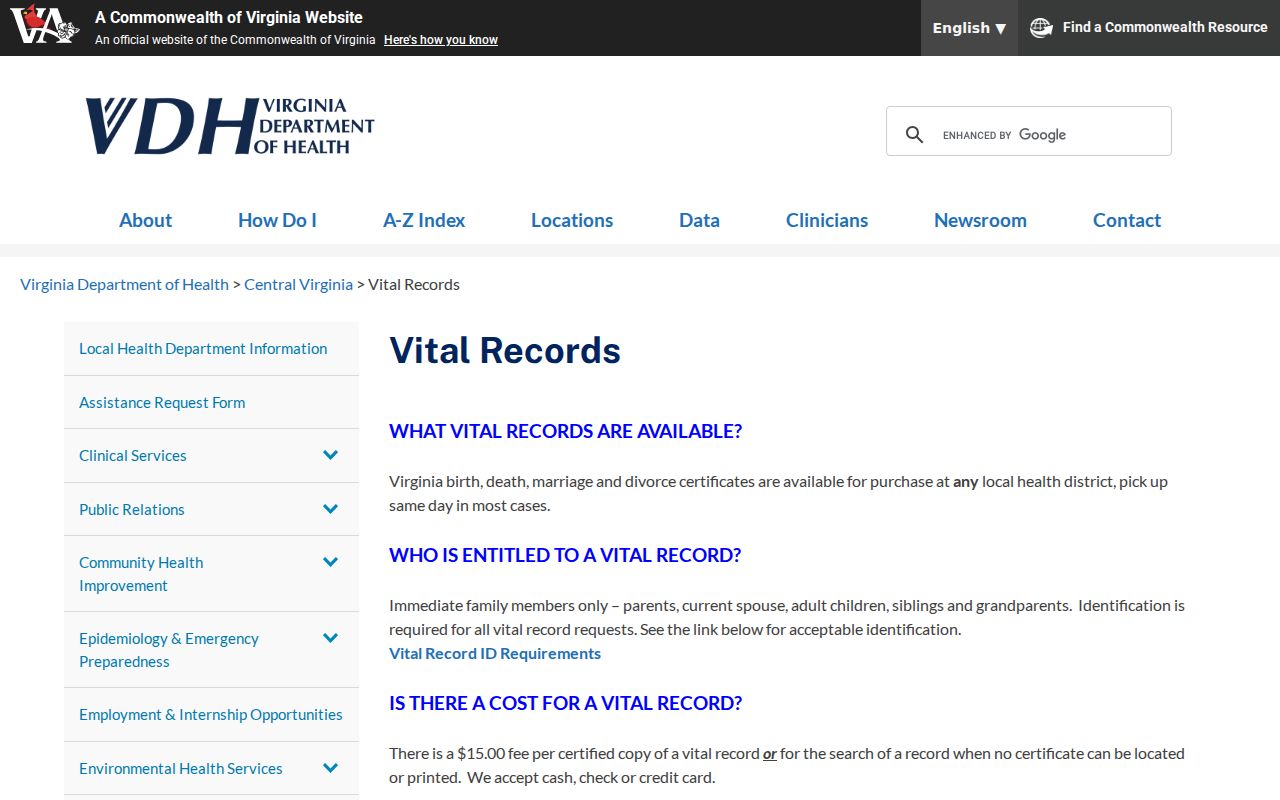
Take the local office details when you file a request, then keep the death certificate apart from the estate or deed record.
Parent Tracts and Louisa Plats
A Louisa County parcel often descends from a larger parent tract. It may also combine land once carried in separate deeds. The county's final subdivision plat checklist asks for the source of title and last instrument reference. It also covers owners and adjoining lines, streets, easements, lot lines, bearings and distances, and building sites. Those references can bridge a named lot back to earlier ownership. Lot numbering sometimes changes. Record the present tax map number alongside every prior lot or plat identifier. Search both the county subdivision file and the clerk's recorded plat. Remember that a planning approval alone does not prove the final plat was ever recorded. It also does not prove that a particular buyer actually took title.
Metes and bounds describe measured lines. Acreage, natural features, and adjoining owners can help you match an older description. That matters when the street name is new or missing from the deed records.
Historic Names in Louisa Deeds
Louisa town was chartered in 1893 and grew up around the courthouse and the railroad. Mineral wore several names before incorporation in 1902, including Tolersville, Davis' Turnout, and Mineral City. An old plat, newspaper notice, or deed may carry one of those historic labels. It may not carry the current town name at all. Search each alternate name along with route and road references. Then verify the legal description and the adjoining landowners before trusting the match.
For a Louisa town parcel, Main Street and courthouse-area lot or plat references often beat a subdivision name. In Mineral, the mining-era name sequence explains a lot. It shows why a property record can seem to point somewhere else entirely. Questions about the present owner and update lag belong on the Louisa County current owner page. This page traces former owners and the backward deed chain.
Limits of Former Owner Research
Gaps happen in every deed chain. Estate transfers, name changes, index limits, parcel divisions, and records not yet digitized can all break the sequence. Search both party roles. Compare the land description at every step. If a current conveyance matters, verify it with the clerk and a title professional. Louisa County publishes no online cutoff year for its property records, so assume no specific start year.
Use for property history. Former-owner research can support house history, estate work and title diligence. Do not use it to track, threaten or harass a living person.